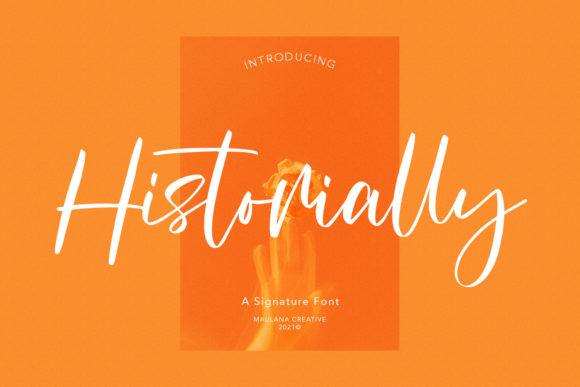
Historially: A Script Font for Editorial Design
Historially is a script font that brings a stylish and elegant touch to editorial design. Designed with both readability and visual appeal in mind, this font is perfect for creators who want to elevate their content without compromising on clarity. Whether you're working on blog headers, magazine covers, or printable guides, Historially offers a versatile solution that supports both creative expression and practical layout needs.
Aesthetic Versatility for Editorial Work
Historially stands out for its balanced mix of elegance and approachability. The font features fluid, connected strokes that give it a handwritten feel, yet it maintains enough structure to remain legible in various applications. This makes it ideal for use in headings, pull quotes, and decorative elements where a touch of personality can enhance the overall design.
The font's soft curves and consistent spacing contribute to a sense of warmth and sophistication, making it particularly well-suited for lifestyle blogs, recipe ebooks, and wedding guides. Its subtle variations in stroke weight add depth and visual interest, helping to guide the reader’s eye through the content while maintaining a cohesive aesthetic.
Editorial Applications and Layout Strategies
Historially is not just a pretty font—it’s a powerful tool for editorial design. It works exceptionally well as a display font, drawing attention to key sections like headlines, chapter openers, and cover text. When used in moderation, it can also serve as an accent font, adding character to otherwise plain layouts.
For example, a lifestyle blog might use Historially for its header to create a welcoming and stylish first impression. In a digital magazine, it could be paired with a clean sans serif body font to ensure readability while maintaining a visually engaging layout. Similarly, a printable planner could incorporate Historially into its title page or section dividers to add a personal touch.
When designing for print, it’s important to consider how Historially performs at different sizes and resolutions. At smaller sizes, the font remains clear and easy to read, which is essential for body copy. However, it’s best suited for shorter text such as titles, subtitles, and pull quotes rather than long paragraphs.
Font Pairing and Visual Hierarchy
Pairing Historially with complementary fonts can significantly enhance the overall design. For instance, pairing it with a readable serif font like Georgia or a modern sans serif like Montserrat creates a strong contrast that highlights the elegance of Historially while ensuring the body text remains accessible.
In web design, Historially pairs well with clean, minimalistic layouts. Its script style adds a touch of creativity to social media graphics and website headers, making it a great choice for brand identity and content branding. When used in conjunction with a sans serif font for navigation and captions, it helps establish a clear visual hierarchy that guides the reader through the content effectively.
For print projects, consider using Historially alongside a bold, structured font for headings and subheadings. This combination ensures that the design remains professional and easy to navigate, even when printed in larger formats.
Readability and Accessibility Considerations
While Historially is designed for readability, it’s important to consider how it performs across different mediums. On screen, the font should be used with care to avoid overwhelming the reader, especially in longer texts. It’s recommended to test the font at various sizes and resolutions to ensure it remains legible on mobile devices and high-resolution displays.
When exporting to PDF or other print formats, check that the font is embedded properly and that it renders consistently across different platforms. This is particularly important for commercial use, such as in ebooks, templates, and paid newsletters, where reliability and quality are essential.
Commercial Use and Licensing
Historially is a commercial font, meaning it can be used in a wide range of projects including ebooks, templates, printables, and client publications. When purchasing a license, make sure to review the terms carefully to understand how the font can be used in your specific context. This includes considerations for web design, social media graphics, and digital downloads.
For independent content creators and small publishers, having access to a premium font like Historially can be a valuable asset. It allows for greater flexibility in design choices while maintaining a high standard of quality and professionalism.
Conclusion
Historially is more than just a script font—it’s a versatile design tool that enhances editorial work with its elegant style and practical application. Whether you’re creating content for blogs, magazines, or digital products, this font offers a balance of beauty and functionality that supports both creative vision and reader engagement.